低俗怪谈
China takes overseas archaeology from Silk Road to South America_我的网站

一 |
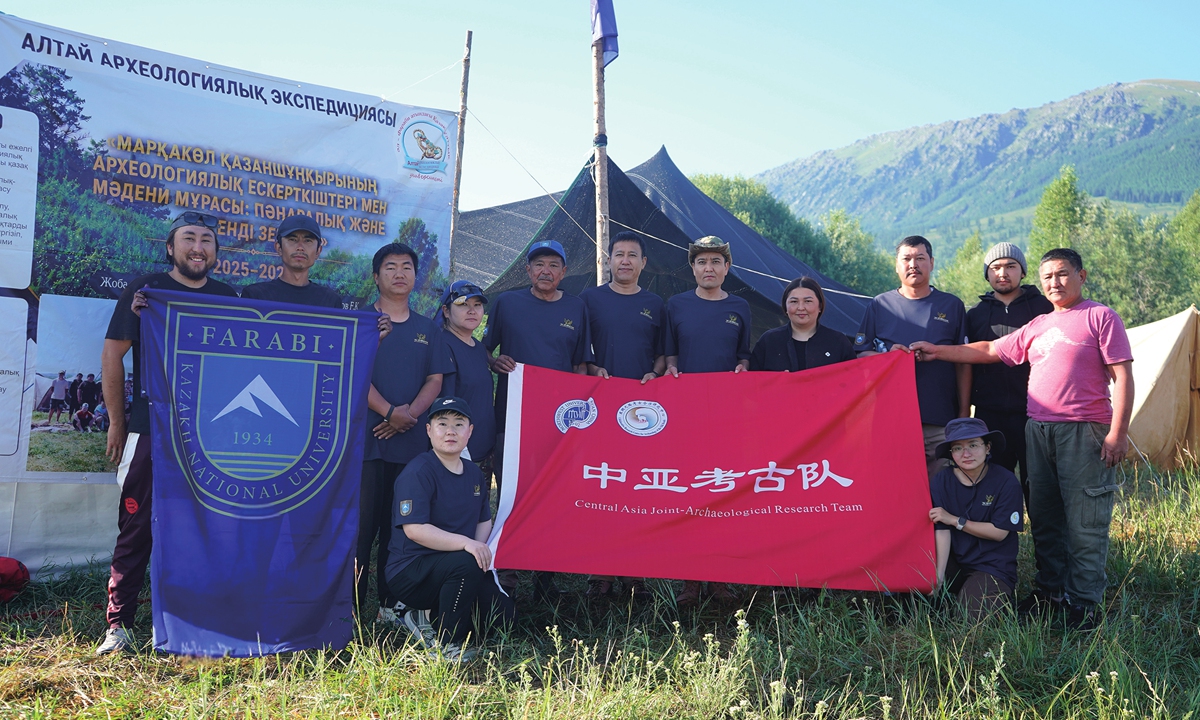
Members of the China-Kazakhstan joint archaeological project pose for a photo. Photo: Collaborative Research Center for Archaeology of the Silk Roads
China is set to launch its first joint archaeological project in South America, following an agreement between Chinese and Peruvian institutions to study the ancient Caral civilization. The move marks a new milestone in the country's growing overseas archaeological cooperation.
The Institute of Archaeology of the Chinese Academy of Social Sciences, Peru's Caral Archaeological Zone under the Ministry of Culture, and the Professional School of Archaeology at the National University of San Marcos signed a cooperation agreement on Saturday to conduct research on the ancient Caral civilization.
The Caral civilization, which is considered to be the oldest civilization discovered in the Americas, emerged along Peru's northern coast and dates to around 3000 BC to about 1800 BC.
The project marks China's first joint archaeological initiative in South America, expanding its overseas archaeological footprint to four continents: Asia, Africa, Europe and South America. It also encompasses cooperation with Belt and Road partner countries, major centers of ancient civilizations and regions crucial to the study of human origins.
For Chinese archaeologists, the project represents a new step in overseas archaeological engagement and international cooperation, fostering mutual learning and dialogue among civilizations, Chinese experts said.
Cooperation beyond borders
In recent years, Chinese institutions have participated in a series of overseas archaeological projects, from exploring ancient cities along the Silk Road to studying early civilizations in Africa and Central Asia.
They not only brought Chinese expertise and talent, but also advanced Chinese technologies, equipment and solutions, experts said.
In February, a significant archaeological breakthrough has emerged from Mit Rahina in Giza, the site of ancient Memphis in Egypt, where a joint Chinese-Egyptian mission has uncovered a limestone structure believed to be connected to the temple of King Pharaoh Apries from Egypt's 26th Dynasty (664-525 BC), according to the Xinhua News Agency.
Zhang Hai, head of the Chinese team and an archaeologist from Peking University, told the Global Times in a previous interview that the Chinese contingent applied distinctive methods for documenting and recording finds, while deploying Chinese-developed technologies such as the "4D kankan Meta" 3D scanner for precise, real-time topographic and sectional modeling, plus specialized software for capturing dislocated stone elements in 3D to aid future digital restoration and preservation.
In the latest China-Kazakhstan joint archaeological project, Chinese equipment and technologies played an important role in the team's discoveries.
Building on the excavation, the archaeological team used drones and the "I Survey" mobile field documentation system to conduct systematic surveys around the excavation area. The survey covered more than 10 burial grounds and documented more than 50 Pazyryk-era tombs.
Pazyryk culture flourished from the late sixth century BC to the third century BC, Shao Huiqiu, a professor at the Collaborative Research Center for Archaeology of the Silk Roads, Northwest University, told the Global Times.
According to Shao, who is the Chinese lead for the China-Kazakhstan joint archaeological project, none of the tombs had previously undergone formal excavation, giving them significant research potential. The use of these technologies has enabled the team to carry out more efficient and comprehensive surveys of the area,
During the China-Kazakhstan joint archaeological project, archaeologists have recovered a number of important artifacts, including human remains, pottery, gold foil pieces, horse bones and iron horse equipment.
The finds have provide valuable material evidence for studying the burial practices, funerary customs and material culture of the Pazyryk culture in the Lake Markakol region, said Shao.
Researchers also conducted regional surveys around the excavation area, documenting more than 50 Pazyryk-era tombs.
Through the joint archaeological project, China and Kazakhstan have gained a deeper understanding of Bronze Age to Early Iron Age archaeological remains in the Lake Markakol basin, according to Shao.
In 2027, the two sides will continue excavations at key sites and burial grounds identified during the survey, while advancing regional archaeological investigations, data analysis, multidisciplinary research, young archaeologist training and academic exchanges.
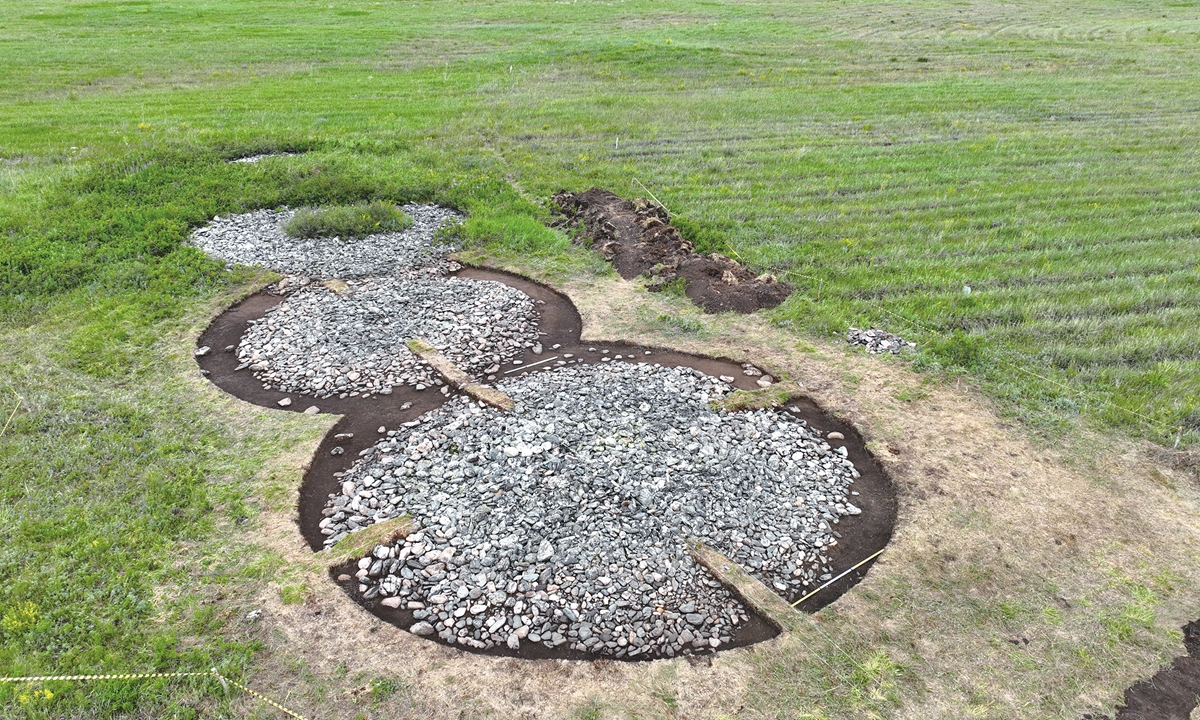
A tomb uncovered by the China-Kazakhstan joint archaeological team Photo: Collaborative Research Center for Archaeology of the Silk Roads
Archaeological exchangesChina's overseas archaeological cooperation has also become a platform for broader exchanges among researchers and civilizations.
Such projects, experts say, are helping expand archaeological research beyond national borders and provide new perspectives on exchanges among ancient civilizations.
China's overseas archaeology has grown alongside its broader participation in global cultural heritage protection.
The National Cultural Heritage Administration's cultural heritage development plan through 2030 calls for expanded archaeological cooperation in Austronesian-speaking regions, trans-Himalayan areas, and routes connected to the Silk Road and Maritime Silk Road, reported Xinhua.
The plan seeks to strengthen the methods used to trace Chinese cultural artifacts overseas, and advance efforts to retrieve lost cultural relics.
It also pushes for greater Chinese participation in global cultural heritage governance and expanded international partnerships, including new protection cooperation agreements with more countries worldwide, according to Xinhua.
In these joint collaborations, researchers from different countries bring together their expertise in regional archaeology and fieldwork, conducting exchanges on archaeological surveys, excavations, multidisciplinary research and regional cultural studies. Such cooperation has strengthened mutual learning and laid a foundation for long-term partnerships, according to Shao.
The China-Uzbekistan cooperation has established research centers in Samarkand and Termez to support studies on human-environment interactions and cultural heritage. The initiative has also trained professionals in Silk Road archaeology, scientific research and heritage conservation through programs for Uzbek universities and research institutions, while promoting international academic exchanges to advance Silk Road heritage protection and cultural cooperation, noted Zhu Jiangsong, a member of the China-Uzbekistan joint archaeological team from the School of Cultural Heritage, Northwest University.
Through these partnerships, Chinese archaeologists are not only contributing technology, research experience and training, but also gaining first-hand materials and fresh perspectives that help advance the study of ancient civilizations and enrich China's archaeological research.
。 刚刚过去的9月,新一届大学生凭借一纸录取通知书,开启了4年的大学时光。

二 | 然而,几乎与此同时,这些刚刚被郑重签收的录取通知书,已悄然出现在二手交易平台上。
中国海洋大学今年的录取通知书附赠的“南极海水吊坠”,被卖出高价。(图/二手平台截图)
中国海洋大学今年的录取通知书附赠“南极海水吊坠”,被网友称为“全网最浪漫录取通知书”。但很快就有人发现,它在二手平台上被炒到1800~5000元。南京大学带有纪念邮票的纪念礼盒,也标价数百至上千元。卖家大多是刚收到录取通知书的2025级新生,有人整套售卖,也有人单独出售录取通知或其中的某个纪念品。
录取通知书不再是学生珍藏的纪念品,而是可以变现的隐形财富。

三 | 这一轮出售风波,也隐隐透露了一代年轻人对待学历的心态正在悄然发生变化。
与其白白落灰,不如卖掉折现
近几年,各大高校在录取通知书的设计上愈发讲究,越来越有仪式感。复旦大学的2025年新生录取通知书,以潞绸包装封面,附赠云南茶砖和采用沉金工艺的NFC卡片;哈尔滨工业大学则以宇宙和卫星为主题设计礼盒,礼盒主体采用特种航天材料制作。
但矛盾的是,随着全社会电子化程度提高,一些高校并不需要新生凭录取通知书报到,只需在相应程序上完成手续即可。

四 | 越来越卷的录取通知书,更像是迎合新生及家长的心理需求而做出的一系列仪式化的改进。
已经有不少“南极海水吊坠”被卖掉。(图/二手平台截图)
“蓝色水晶材质,金色边框典雅大方。成色完好。吊坠配有精美礼盒包装,内含南极海水纪念卡片。送礼自用都很合适。”闲鱼App上,一条中国海洋大学录取通知书所附赠的南极海水吊坠前不久刚刚被人拍下,链接显示为“已售”状态,售价为1299元。
以往被悉心珍藏的录取通知书和纪念品,到了现在,却变成年轻人在二手平台上“回血出物”的商品。这当中所折射的社会观念变迁,值得玩味,似乎不能一味地加以批判。

五 |
在教育资源和物质条件相对匮乏的二十世纪八九十年代,大学生是“稀缺物种”,考取大学意味着在教育水平上拥有绝对优势,甚至在某种程度上意味着“逆天改命”,代表了阶层跃升的可能性。如今,高等教育日益普及,以2025年为例,本科生录取人数约为480万人。
大学生不再稀缺,大学录取通知书虽然仍具有纪念性,但其含金量很难再和过去同日而语,象征意义也随之淡化。

六 |
对于习惯了无纸化电子世界的Z世代来说,实体纪念物所附带的情感浓度已经没有那么强烈了。

七 | 手持录取通知书拍照片,上传至社交媒体,收获一批点赞和祝福之后,一纸录取通知书似乎就完成了其使命。
因此,在一些更为看重实用性的人眼里,与其把这些设计精美的纪念礼盒和录取通知书束之高阁,白白落灰,不如把它折现,变成大学的“启动资金”或必需品——一副蓝牙耳机、一个机械键盘、一次旅行,等等。或者就当成一次“断舍离”,把它换成一个月的生活费。
和名校沾边,就能卖得出去?
带有名校光环的事物,似乎总是能得到国人的偏好和青睐。无论是985高校在校庆时推出的文创礼盒以及校徽,还是印有高校名称字样的T恤和帆布袋等,或多或少都存在着一定溢价。
就连一些旁人眼中极其抽象的事物,只要和名校紧密绑定,就会被赋予商品价值。

八 |
在二手平台上,除了录取通知书,一些更“匪夷所思”的商品时有出现。

九 | 500毫升的北京大学未名湖湖水,被标价20元到100元不等;900克的北大校内土壤则被卖到129元。商家还表示,这些拍品均附带拍摄视频,以证明它们确属“北大出品”。

十 | “(北大校内土)对多种植物生长具有神奇效果,有助于调节空气湿度。每日凝视未名湖湖水,可提振精神,激发智慧。”
在二手平台上,北大未名湖湖水和校内土被当成商品出售。(图/二手平台截图)
考入北大、在未名湖边徜徉或许需要极大的努力、天赋和运气,但购买一瓶未名湖湖水却唾手可得。购买这些带着名校符号的商品,反映的是人们对顶尖学府的想象、向往和遗憾,以及根深蒂固的名校情结。
作为95后的颜青坦言,自己正是这类消费行为的亲历者。颜青回忆道,高中时期自己被老师灌输了不少关于名校有多牛的鸡汤,班主任更会时不时分享“晚上不睡觉疯狂学习,最终考上清华北大”的励志故事。
高二时,趁高考全校放假三天,颜青特地从河北坐了几小时动车来到北京。她去“梦中情校”北大逛了几圈,还买了不少带有北大logo的文创产品。

十一 | 其中,有一本封面上印着北大徽标的记事本,颜青每天都用它来写当天的to-do list,还会摘抄一些激励自己的鸡汤句子。

十二 |
虽然颜青已经不记得自己当时花了多少钱,但相对于物价较低的老家,她所买的这些印着北大logo的各色产品,算是一笔相当大的开支。

十三 |
这似乎形成了一种奇妙的对照:一方面,有相当多的人仍然在追逐名校符号;另一方面,新世代的大学生对录取通知书所承载的名校光环逐渐祛魅。

十四 | 而这一纸录取通知的奇幻漂流,未来将去往何方,暂时还无人预知。
在国外,有不少一流大学的做法是这样的:不再给新生邮寄录取通知书,而是由新生自行在所申请大学的页面下载offer。这份offer相当于一份入校指南,告知学生被什么专业录取、何时去学校报到、如何办理入学手续等。有论者认为,这种做法可以减少印制、发送录取通知书的成本,且高效,值得借鉴。
当然,也有不少人愿意保留录取通知书,因为它定格了自己人生中的重要节点。以颜青为例,后来她没有如愿考上北大,而是去了另一所985高校。

十五 | 当被问及会不会考虑出售自己的录取通知书时,颜青几乎瞬间就给出了否定的答案:“虽然我最后考上的学校比不上北大,但这张录取通知书至少证明了我考上过这个学校。”
本文来自微信公众号:惊蛰青年,作者:梅珍里,编辑:桃子酱,校对:遇见。
Current article:http://ncrsw7q.zhenzongtingrangunhongqiusao.shop/list_fs1e2im/9wi5.html
Published on:08:48:10